Unlocking the Treasure Trove: How to Find Your Most Profitable Products Using WooCommerce Order Data
Behold, dear WooCommerce store owners! Amidst the sea of products populating your virtual shelves, lie hidden gems—your most profitable products. But how do you unearth these treasures? Fear not! By diving deep into WooCommerce order data, you can not only discover which items are stuffing your metaphorical mattress with cash but also refine your strategy to boost future profits. Let’s set sail on this adventure, shall we?
Why Focus on Profitable Products?
Before we grab our data-diving gear, let’s pause to ponder why identifying your most profitable products is crucial to your eCommerce success. It’s simple:
- **Maximize Returns**: By knowing which products rake in the most dough, you can focus your inventory, marketing efforts, and sales strategies around these high performers.
- **Resource Allocation**: Allocate your resources more effectively—be it time, money, or effort—toward products that are proven winners.
- **Strategic Decisions**: Understanding product profitability aids in making informed decisions, from pricing adjustments to supplier negotiations and beyond.
The Map to Riches: How to Analyze Your WooCommerce Order Data
Now, equipped with the why, let’s navigate the how. Using WooCommerce order data to pinpoint your most profitable products involves several stages of good ol’ fashioned number-crunching (and perhaps less old-fashioned, insightful analytics). Here’s your step-by-step map:
Step 1: Gather the Data
First things first, ensure you have access to comprehensive order data. WooCommerce stores this data within your WordPress dashboard, but here’s the kicker—you need to pull this data into a format that allows easier manipulation and analysis.
Step 2: Analyze Sales and Revenue
Once you have your data, start with the basics: sales and revenue. Sort your products by the total revenue generated or the total number of units sold. This gives you a raw look at what’s popular and what’s not.
Step 3: Calculate the Profit Margins
The real magic happens when you move beyond mere sales figures into the realm of profitability. For each product, calculate the profit margin using the formula:
Profit Margin = (Revenue – Cost of Goods Sold) / Revenue
This calculation unveils which products offer the best return on investment, not just those that sell well.
Step 4: Consider Other Factors
While crunching numbers is thrilling, consider other qualitative factors that might affect profitability:
- Seasonal trends
- Customer reviews and satisfaction
- Return rates and complaints
These can provide context to the numbers, adding layers to your analysis that pure data might miss.
Enhancing Your Data Analysis with Alpha Insights
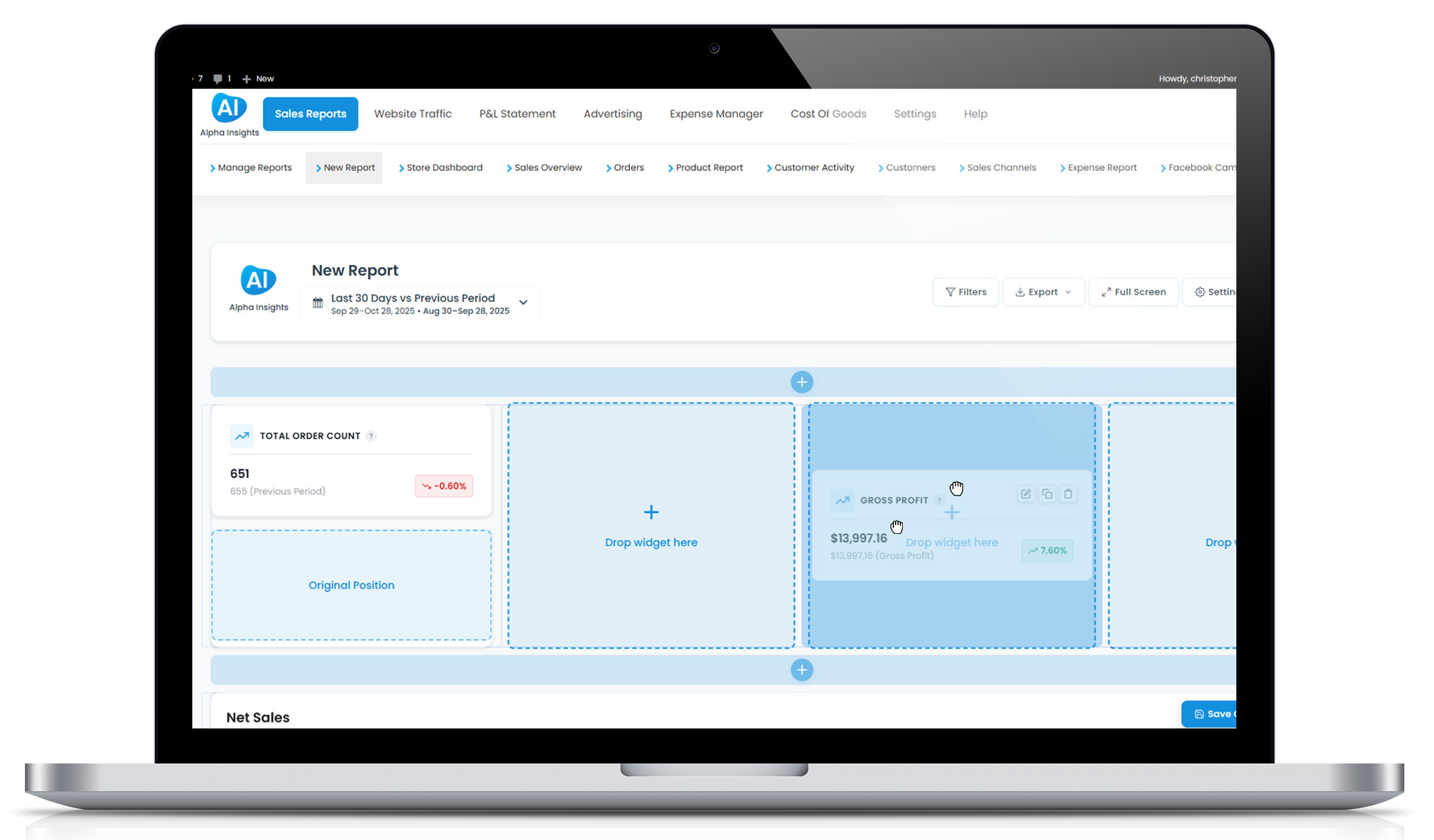
But, ahoy! While the manual methods provide great insights, who has the time to spend hours in spreadsheet hell? This is where Alpha Insights comes into play. As a dedicated WooCommerce analytics plugin, it helps you identify your most profitable products effortlessly. Here’s what it can do:
- Faster Data Crunching: Automatically gathers and processes your WooCommerce data, saving you from the abyss of manual data entry.
- Advanced Metrics: Goes beyond basic profitability, offering insights into customer lifetime value, repeat purchase rates, and other sophisticated metrics.
- User-friendly Dashboards: Visualizes the data in an easy-to-understand format, making it simple for you to make informed decisions swiftly.
Integrating Alpha Insights into your WooCommerce store not only smoothens the analytical process but also ensures that you’re constantly updated with the most relevant and actionable insights.
Turning Insights into Strategy
With your most profitable products now revealed, what’s next? Turn these insights into action:
- Stock Optimization: Adjust your stock levels based on the profitability of products to ensure you’re always ready to meet demand without over-investing in less profitable items.
- Marketing Focus: Redirect your marketing efforts to promote high-profit items more aggressively, potentially increasing their sales volume and overall profitability.
- Price Adjustments: Reevaluate your pricing strategy. Perhaps there’s room to increase the price of high-margin goods slightly without dampening sales.
- Supplier Negotiations: Armed with detailed profitability data, negotiate better terms with suppliers to further increase margins.
There you have it—a treasure map leading to the hidden gems within your WooCommerce store. Remember, the journey doesn’t end here. Continuous analysis ensures your store adapts and thrives amidst the ever-changing tides of the eCommerce world. Happy treasure hunting!