Tools That Integrate WooCommerce Data Into Business Reporting Systems
Running an online store is akin to juggling. You’re constantly keeping an array of balls in the air—from product management and customer service to marketing strategies and inventory control. But while all these tasks are vitally important, there’s one element that could make or break your success: effective business reporting. Without robust analytics and clear data interpretation, steering your WooCommerce store in the right direction becomes akin to navigating a maze blindfolded. Luckily, with the right tools to integrate your WooCommerce data into your business reporting systems, you can take off that blindfold and see your path to success clearly.
Why Integrate WooCommerce Data into Business Reporting Systems?
Before diving into the tools, let’s address the elephant in the room: Why bother integrating WooCommerce data with other business reporting systems? Isn’t WooCommerce’s built-in analytics enough? On the contrary! While WooCommerce provides some decent out-of-the-box insights, complex businesses often require deeper analysis, or data integrated with other business functions like finance, marketing, and customer relations management (CRM) systems. Here’s what such integration can offer:
- Enhanced Visibility: Consolidated data offers a helicopter view of your business operations.
- Better Decision-Making: Integrated reports provide rich insights, enabling data-driven decisions.
- Improved Efficiency: Automation of data collection and reporting frees up your time for other business-critical activities.
- Customization: Tailor reports to what’s most indicative of your business’s performance.
- Forecasting: Stronger data sets to base your forecasting models, improving accuracy.
Top Tools to Consider for Seamless Integration
Now, let’s talk about some of the top tools that can help you seamlessly integrate WooCommerce data with other business systems.
1. Alpha Insights
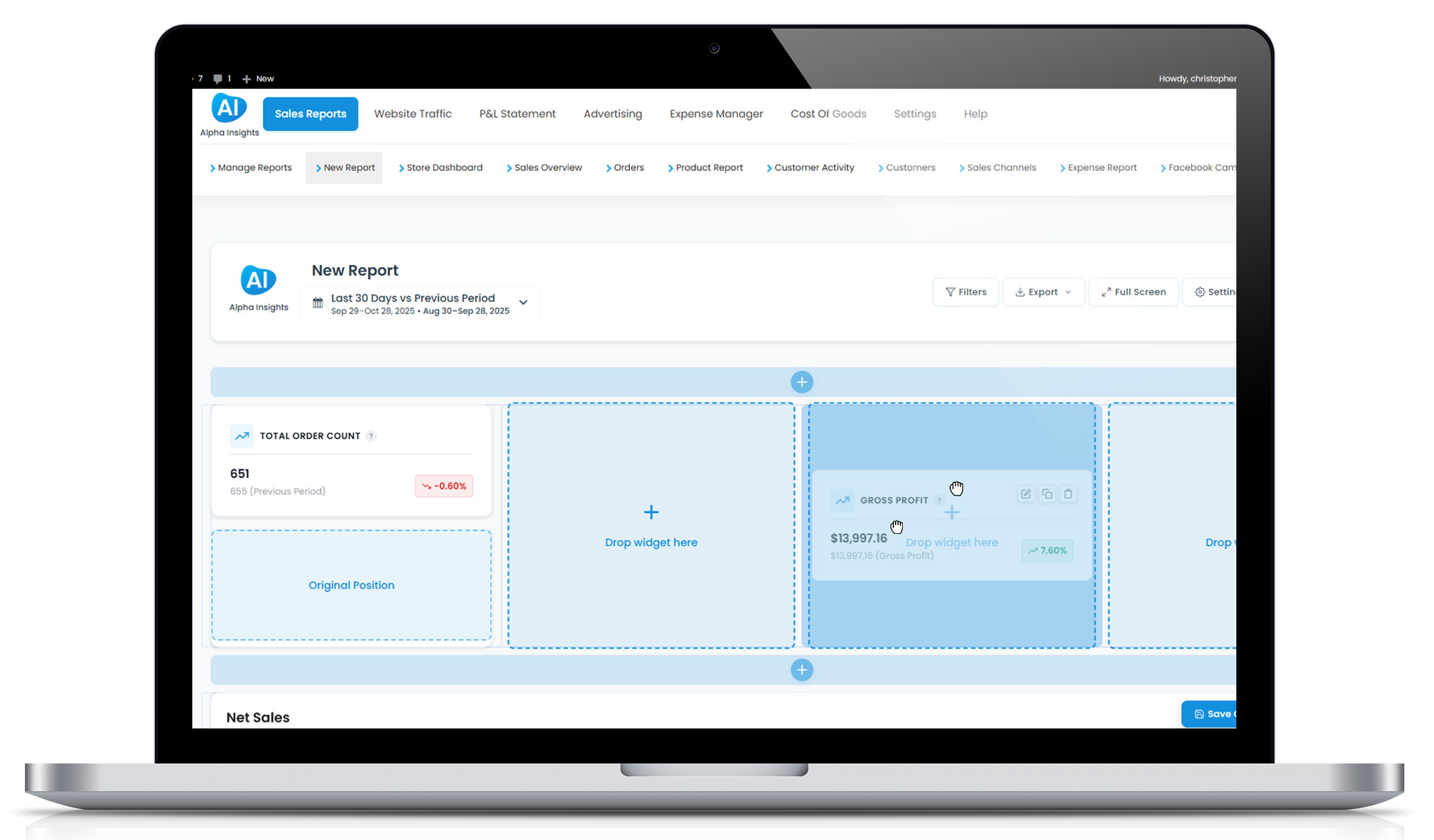
Alpha Insights is a potent WooCommerce analytics plugin designed to go beyond the surface level. It digs deep, offering unprecedented insights into your shop’s performance. More than just tracking sales, it provides nuanced understandings about customer behaviors, order values, and product performance, integrating easily with other business systems to centralize and streamline reporting.
2. Microsoft Power BI
A heavyweight in the world of business intelligence tools, Microsoft Power BI allows you to pull data not just from WooCommerce but from various sources, helping you create comprehensive dashboards. With extensive data processing capabilities, it’s ideal for complex analytics that require aggregation from multiple business systems.
3. Google Data Studio
For those vested in the Google ecosystem, Google Data Studio can transform your WooCommerce data into customizable informative reports and dashboards. It’s free, quite robust, and integrates smoothly with Google Analytics and other data sources to provide a fuller picture of your digital landscape.
4. Zapier
Zapier acts like a bridge, allowing WooCommerce to connect to over a thousand other web services without a single line of code. Automate workflows by connecting WooCommerce with tools like Salesforce, QuickBooks, and Slack. Its robust automation capabilities can save tons of manual data handling.
5. Metorik
Serving as a co-pilot for your WooCommerce store, Metorik provides real-time reports, segmenting, and even email automation. It seamlessly hooks into your WooCommerce data and combines it with other services to give you a truly comprehensive dashboard that updates in real time.
How to Choose the Right Integration Tool
So, how do you pick the right tool from this tech-packed lineup? Here are a few tips:
- Identify Your Needs: Understand what kind of data and reports are most beneficial for your business and select a tool that best supports those needs.
- Consider Your Budget: From free tools like Google Data Studio to subscription-based services like Metorik, your budget will play a significant role in your decision.
- Usability: Ensure the tool you choose does not require you to be a tech wizard. Ease of use is key to maintaining efficiency.
- Integration Capabilities: Confirm that the tool integrates not just with WooCommerce but with other systems you already use.
- Support and Community: A responsive support team and an active community can greatly smooth out potential bumps in your data integration journey.
The Dream Team of Analysis
Arming yourself with powerful tools like Alpha Insights can transform the way your business operates by offering a fresher, more granular perspective on the data that matters most. Integrating your WooCommerce data into a robust business reporting system not only gives you insightful back-end analytics but also helps cast predictive forecasts that pave the way for informed, strategic business moves.
Remember, in the digital age, your store’s data is a goldmine waiting to be excavated. Using the right tools to assimilate and analyze this data efficiently can lead you to unearth hidden treasures of business intelligence. Choose wisely, integrate swiftly, and watch your WooCommerce store flourish. Happy analyzing!