Deciphering the Rosetta Stone of eCommerce: How to Link Marketing Spend to Actual Profit in WooCommerce
Oh, the enduring puzzle of marketing spend! It’s like that mysterious crop circle in the cornfields of eCommerce—everyone sees it, but not many understand it. In other words, if each dollar you spend on marketing were a tiny boat setting off into the ocean, how do you make sure these boats not only reach the shore but also bring back treasure? More importantly, how do we link this adventurous spend to actual, tangible profit in your WooCommerce store?
It’s about turning data into decisions, insights into actions. This journey requires arming yourself with the best analytics weaponry, a pinch of creativity, and the strategic know-how that would make even Sun Tzu take notes. Let’s embark on this adventure together and navigate through the seas of data to discover profitability islands.
Understanding the Ties Between Marketing Spend and Profitability
Before jumping into the how-tos, let’s get comfy with the concept first. Linking your marketing spend to actual profit means having a deep understanding of your ROI (Return on Investment). Yes, ROI isn’t just a buzzword sommeliers use to impress at dinner parties; it’s the lifeblood of your marketing strategy.
What is ROI and Why Should You Care?
ROI in marketing measures the profitability of your marketing campaigns. It answers the million-dollar question: “For every dollar I spend on marketing, how much profit am I making back?” Here’s why it’s crucial:
- Efficiency: Identify which campaigns do the heavy lifting and which are just leeching off your budget.
- Justification: Convincingly argue for more marketing funds from stakeholders by showing measurable returns.
- Strategy Adjustment: It lets you pivot without breaking a sweat when something isn’t working. Adaptability for the win!
Step-by-Step Guide to Linking Marketing Spend to Profit in WooCommerce
Ready to become a marketing maestro? Here’s how to conduct that orchestra:
1. Implement Robust Tracking Tools
Begin by setting up your tracking tools. Google Analytics is the gold standard here, but don’t just stick to the default installation. Make sure you:
- Integrate Google Analytics with your WooCommerce store.
- Enable eCommerce tracking to see transaction and revenue data.
- Set up goal tracking to monitor specific customer actions.
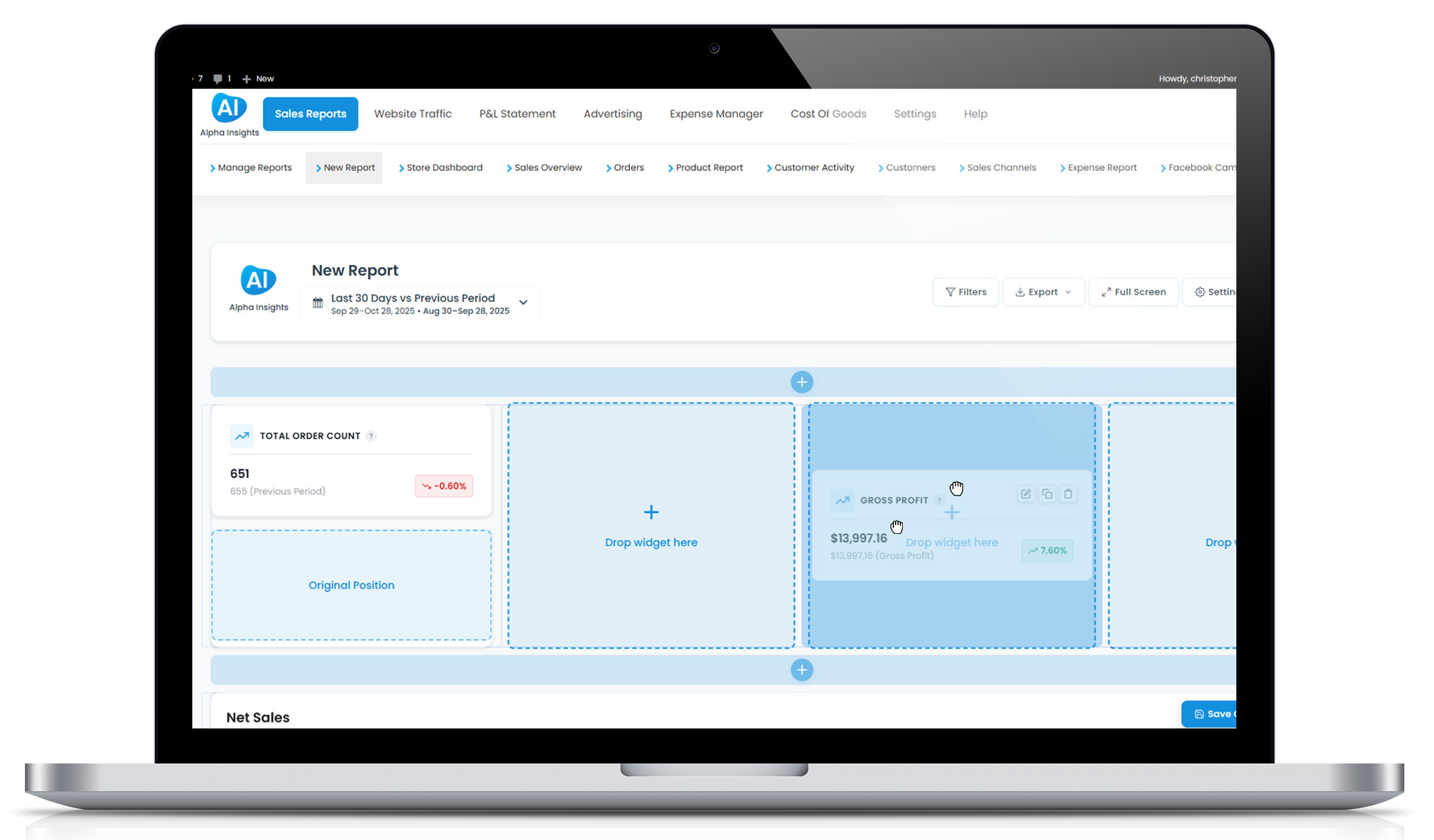
For an even deeper dive into your WooCommerce data, consider using Alpha Insights. This plugin not only compliments your GA setup but also provides more granular insights specifically tailored for WooCommerce stores, assisting you in connecting the dots between spend and profit seamlessly.
2. Define Your Marketing Strategy
What channels are you throwing your coins into? Paid search, social media ads, email marketing? Clear categorization helps in allocation and analysis:
- Organize campaigns by channel to easily track performance.
- Use UTM (Urchin Tracking Module) parameters to track URLs efficiently.
- Monitor both direct response campaigns and longer-term brand campaigns.
3. Analyze and Attribute Revenue
Here’s where it gets geeky—we need to attribute revenue to specific marketing initiatives:
- Use the First-Touch model for initial awareness campaigns.
- Consider the Last-Touch model for campaigns that convert leads to sales.
- Explore more sophisticated models like Linear or Time Decay for a more nuanced view.
With tools like Alpha Insights, revenue attribution gets clearer. You can see which ads led to what sales and adjust your spending in real-time. Peek into the crystal ball of Alpha Insights here.
4. Optimize and Iterate
Now, refine your strategy based on the data. See a channel underperforming? Reallocate budgets. Notice a campaign driving high-value sales? Ramp it up! Always be testing:
- Conduct A/B testing on your ad copy, images, and calls to action.
- Experiment with different segmentation to enhance targeting.
- Use seasonality and trends data to anticipate changes and adapt strategies accordingly.
Common Pitfalls and How to Avoid Them
Ah, the murky waters—here be dragons! But fear not. Here are a few common pitfalls and how to steer clear:
- The Vanity Metrics Trap: Don’t just focus on metrics like clicks and impressions. Dig deeper into those that matter—conversion and revenue.
- Siloed Data: Integrate all your data sources to get a holistic view. Data in silos can lead to misinformed decisions.
- Focusing Solely on Short-term Gains: Balance immediate returns with long-term brand building. Both are crucial for sustained profitability.
Wrapping Up
Connecting your marketing spend to actual profit might seem daunting at first, but with the right tools and strategies, it becomes more like following a well-drawn treasure map. Remember, the key is continuous learning and adapting. Your WooCommerce store is not just a business; it’s a dynamic ecosystem that thrives on informed decisions.
Embark on your voyage with Alpha Insights to master the seas of eCommerce profitability. Navigate wisely, captain!