How to Model Next Month’s WooCommerce Profit With Confidence
Oh, the life of a WooCommerce store owner—the thrill of sales notifications, the agony of cart abandons, the mystery of next month’s profits. Wouldn’t it be wonderful to gaze into a crystal ball and see the handsome figures your store will be raking in next month? Well, who needs clairvoyance when you’ve got cold, hard data?
Forecasting your WooCommerce store’s profit might sound about as easy as teaching quantum physics to your cat, but with the right tools and tips, it’s totally doable—and dare I say, even fun? Buckle up and let’s dive into the art of confidently predicting your WooCommerce profits for the next month!
Understanding the Basics: What Affects Your WooCommerce Profits?
Before you start crunching numbers, it’s important to understand what factors play into those profit predictions:
- Sales Volume: This is the total number of products you sell. More sales generally mean higher profits, unless all those sales come from heavily discounted items.
- Average Order Value (AOV): How much dough are customers dropping per order? Upselling and cross-selling can pad this stat nicely.
- Cost of Goods Sold (COGS): What does it cost you to get those products out the door? This includes production costs, shipping fees, and the like.
- Operational Expenses: Warehouse rental, website maintenance, marketing costs—no business runs for free, and these can eat into your profits.
- Seasonal Trends: Selling umbrellas in monsoon season? Jackpot. Heavy knits in summer? Not so much.
After wrapping your head around these elements, let’s translate them into a forecasting model you can count on.
Gathering the Right Data
Just like baking a perfect pie, accurate profit modeling begins with quality ingredients—in this case, data! Here are the key types of data you’ll need:
- Historical Sales Data: Analyze data from the past few months or the same period in previous years. Notice any patterns?
- Current Market Trends: Is there a new TikTok trend causing a surge in demand for one of your products? Stay up-to-date and adjust predictions accordingly.
- Stock Levels: You can’t sell what you don’t have! Ensure your inventory data is accurate and accounted for in your forecasts.
- Marketing Plans: Got a killer email campaign lined up? Factor in the potential sales spike!
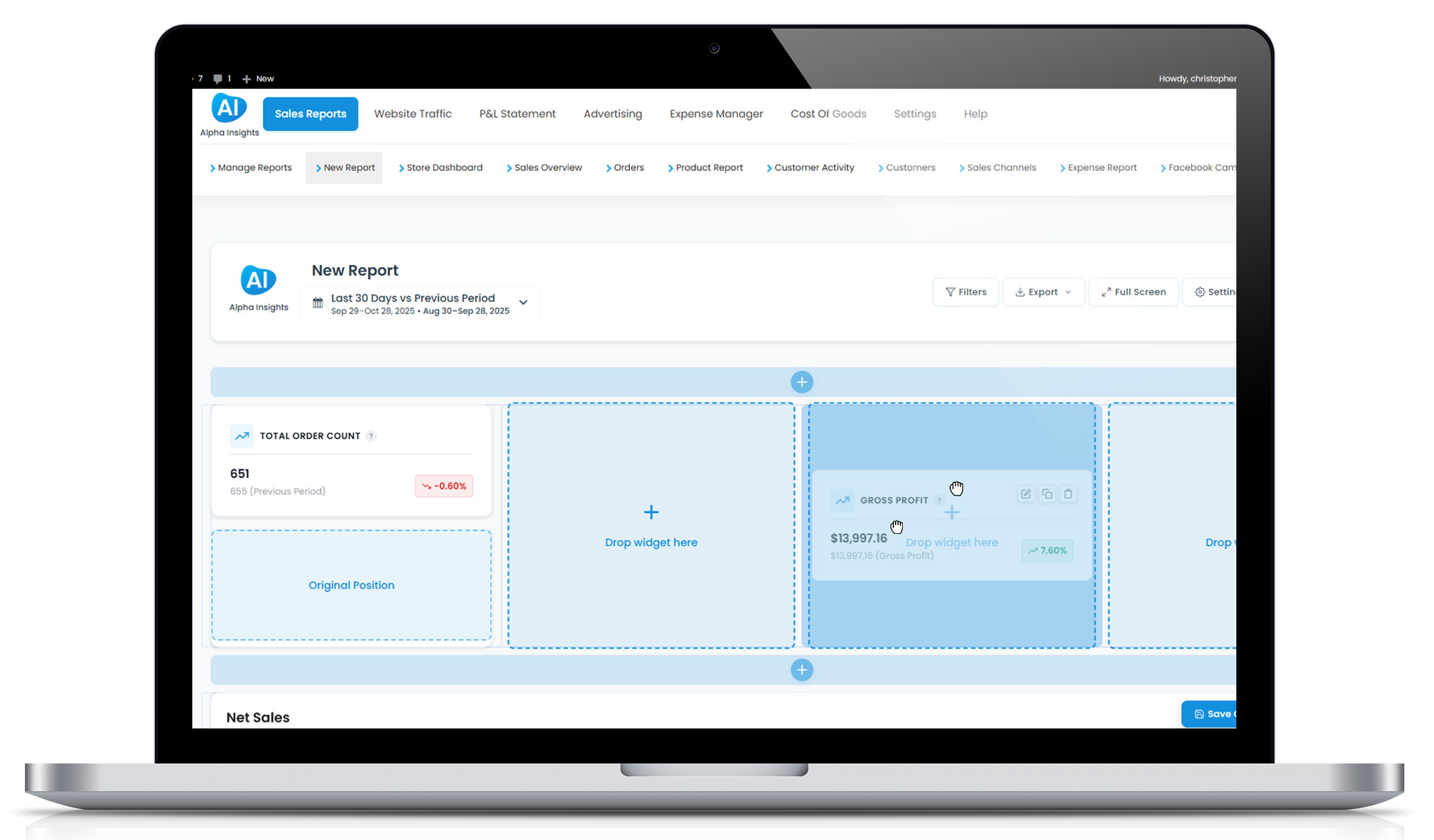
With these data sets at your fingertips, you’re already on your way to a solid profit prediction. Oh, and remember, data is only as good as the tools you use to manage it. This brings us to one of my favorite recommendations: Alpha Insights. It consolidates all your eCommerce data into one intuitive dashboard, making these profit forecasts a breeze.
Building Your Forecasting Model
Now, for the juicy part—creating a forecasting model. Stick with me here, it’s easier than assembling IKEA furniture:
Step 1: Analyze Historical Sales Trends
Start by examining your sales over the past few months or the corresponding month in previous years. Identify any growth trends or seasonal spikes that could influence future sales. An upward trend in product categories might suggest a continued rise in customer interest that you should account for.
Step 2: Adjust for External Factors
Plan for variables like upcoming promotions or external market conditions. This can help you adjust expectations upward or downward based on planned marketing activities or economic conditions.
Step 3: Calculate Expected Sales
Use your historical data and adjustments to estimate the total units you expect to sell. Then multiply those units by your average order value—don’t forget to adjust for any planned price changes or promotions!
Step 4: Factor in Costs
Subtract your estimated cost of goods sold and operational expenses. This will include everything from supplier costs to marketing expenses. If the thought of juggling these numbers makes your head spin, tools like Alpha Insights can automate much of this process, turning what used to be a chore into a simple, painless task.
Refining Your Forecast
Test and Learn: Like a mad scientist, experiment with your model. What happens if you increase your marketing budget? What if a supplier offers a discount?
Stay Agile: As new data comes in, be prepared to tweak your forecast. The digital landscape changes at warp speed, and adaptability is key.
Use the Right Tools: Seriously, having a dashboard that provides real-time insights and integrates all these complex variables can make the difference between a wild guess and a strategic forecast. That’s why I recommend checking out Alpha Insights. It gives you the clarity and control you need to project next month’s profits accurately.
Conclusion
Modeling next month’s WooCommerce profit doesn’t require a crystal ball or a pact with mystical forces. All it takes is a solid understanding of your data, a touch of market awareness, and the right analytic tools at your disposal. With these in hand, you’ll not only forecast your profits with confidence but also make more informed decisions that drive business growth. So, what’s your next move? Dive into your data, explore your tools, and start predicting those profits! Happy forecasting!