Turning WooCommerce Orders Into a Forecasting Engine
Welcome aboard the crystal ball express—next stop, your business’s future! Okay, so maybe we won’t be employing actual sorcery or mystical orbs, but who needs those when you’ve got something even more powerful at your fingertips? That’s right, we’re talking about transforming your everyday WooCommerce orders into a sleek, predictive forecasting engine. Imagine knowing what your sales might look like next week, next month, or even next year! It’s like having a time machine, but less sci-fi and more ROI.
Why You Need Forecasting for Your WooCommerce Store
Before we dive into the “how,” let’s chat a bit about the “why.” Forecasting isn’t just for weather stations or economic analysts. It’s a crucial tool for any eCommerce store owner wanting to make informed decisions about inventory, marketing, staffing, and more. Here’s what effective forecasting can offer you:
- Inventory Management: Predicting future sales means you know how much stock to keep on hand, reducing both overstock and stockouts.
- Budget Allocation: With a clear forecast, you can plan your spending more effectively, whether it’s on advertising, new product lines, or staffing.
- Strategic Planning: Long-term forecasts help you prepare for expansion, scaling, and other big-picture business moves.
- Risk Mitigation: Understanding potential future scenarios lets you prepare for risks and handle them before they become bigger issues.
Step-by-Step: Transforming Orders Into Forecasts
Now, let’s lay down the bricks on the yellow brick road to forecasting wizardry, leveraging the data from orders you’ve already secured through your WooCommerce store.
Step 1: Aggregate Your Historical Sales Data
The foundation of any good forecast is solid historical data. Start by collecting data from your past WooCommerce orders. Key metrics to focus on include:
- Total sales per period (weekly, monthly, yearly)
- Seasonal trends in your sales data
- Bestselling products
- Customer acquisition rates
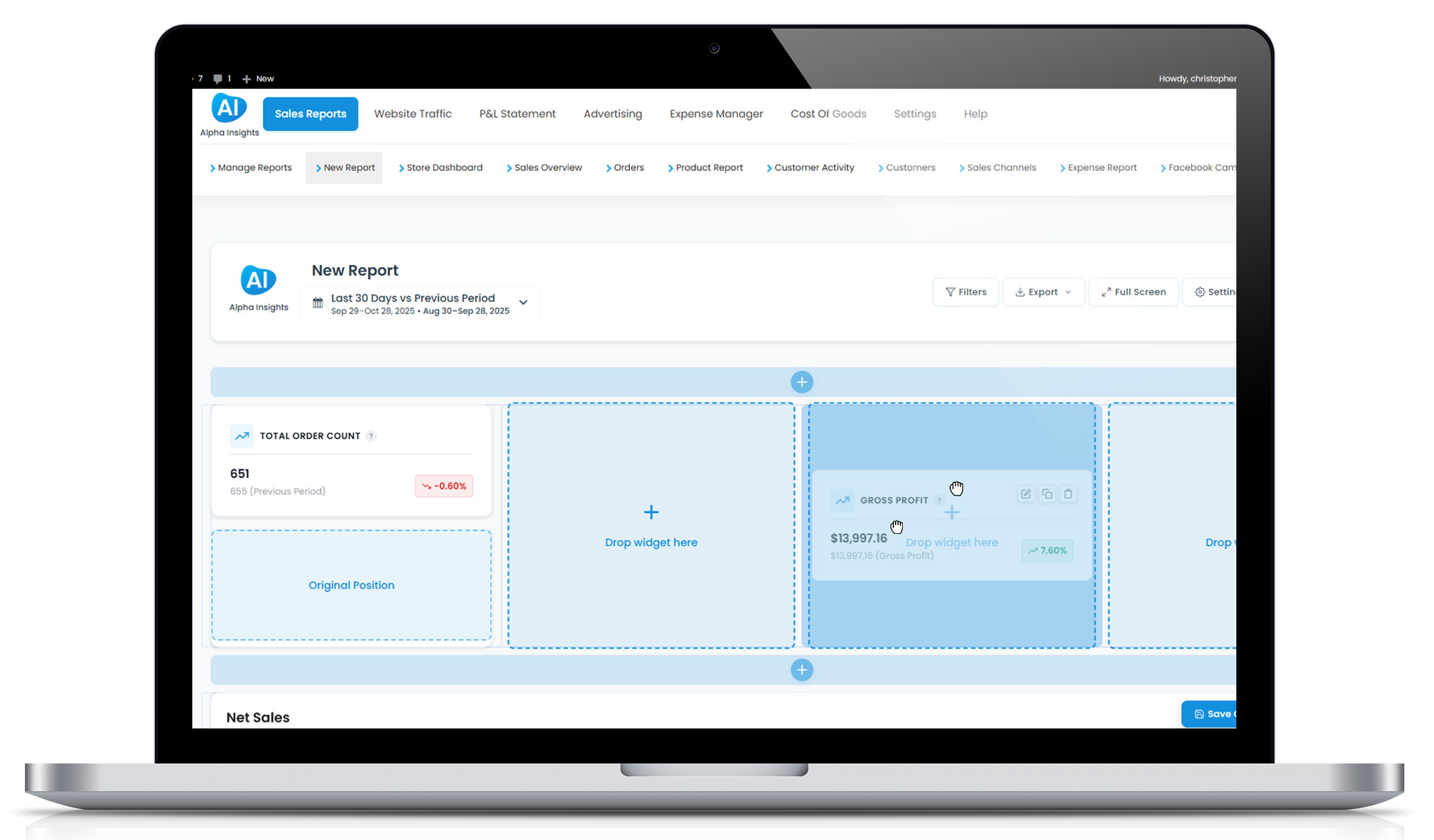
Tools like Alpha Insights are incredibly useful here, as they allow you to seamlessly pull comprehensive data directly from your WooCommerce store without breaking a sweat.
Step 2: Identify Patterns and Trends
Once your historical sales data is arranged neatly at your fingertips, it’s time to play detective. Look for patterns or trends:
- Does a certain time of year see a spike in sales due to holidays or seasons?
- Are there noticeable trends in product preferences among your customers?
- How does the customer acquisition rate correlate with promotional or marketing efforts?
Understanding these patterns will help you anticipate future sales trajectories, essential for effective forecasting.
Step 3: Choose the Right Forecasting Model
There are several forecasting models to choose from, depending on the complexity of your data and the accuracy required. These include:
- Moving averages for simple forecasts when trends are relatively stable.
- Exponential smoothing which is more suited for data with trends and seasonal patterns.
- Regression analysis for when you want to consider external factors or are dealing with very erratic patterns.
Tools embedded within Alpha Insights can help pick a model by analyzing your data’s characteristics and suggesting the most appropriate approach.
Step 4: Apply Your Model and Analyze
With your chosen model, apply it to the historical data to generate a forecast. Initial results might require some tuning—perhaps adjusting how seasonal trends are weighted or recalibrating the impacts of specific promotions.
Analyze the forecast’s accuracy by comparing its predictions against actual outcomes, refine it as necessary, and voila—you’re nearing wizard status in the arts of business forecasting!
Maximizing Your Forecasting Engine
To truly capitalize on your new forecasting capabilities, integrate your forecasts into all areas of your business planning:
- Marketing: Plan your promotions and marketing spending around forecasted high sales periods.
- Staffing: Align staffing levels with expected busy periods to improve customer service and manage payroll costs efficiently.
- Procurement: Adjust your supplier orders based on forecasted product demand to keep inventory costs in check.
Remember, the power of forecasting grows with continual use and refinement. It’s not just about predicting the future once; it’s about constantly improving your foresights to make the most informed decisions every step of the way.
Conclusion
There you have it, the roadmap from WooCommerce store data to a full-fledged forecasting engine. By embracing these predictive powers, you’re not just surviving; you’re thriving. Forecasting allows you to anticipate, prepare, and execute strategies that not only meet the future head-on but shape it to your advantage.
Ready to harness the power of forecasting in your WooCommerce store? Start transforming your order data into actionable insights with Alpha Insights. It’s time to forecast, act, and prosper!
Remember, the road to success is always under construction; let’s make sure you’re building it with the best tools available!