Introduction: The Game-Changer in WooCommerce Reporting
If you’ve ever felt like a wayfarer in the wild world of WooCommerce – trying your best to make sense of crisscrossing data paths and puzzling metrics – you’re not alone. Aligning your WooCommerce reporting with your broader business strategy isn’t just about making better decisions; it’s about transforming how you navigate through the ever-evolving eCommerce landscape. Let’s embark on a journey to make your data work not just harder, but smarter.
Understanding the Importance of Strategic Alignment
Before diving into the technicalities, it’s crucial to understand why alignment matters. In the symphony of online sales, your business strategy conducts the orchestra. Every section (from marketing to inventory) must play in harmony, guided by the score of your strategic objectives. When your WooCommerce reporting sings in tune with this score, magic happens. Sales forecasts, budget allocations, and customer engagement strategies improve, playing a sweet melody of sustainable growth and profitability.
The Core Components of WooCommerce Reporting
To align reporting with business strategy, you first need to understand the building blocks of effective data analysis in WooCommerce:
- Sales Performance: Tracking revenue, order frequency, average order value, and seasonal trends.
- Customer Insights: Understanding who your customers are, where they come from, and their buying behavior.
- Inventory Management: Keeping an eye on what’s in stock, what’s running low, and what isn’t selling.
- Marketing Effectiveness: Measuring the impact of marketing campaigns, from email marketing to social media engagement.
Tailoring Reports to Strategy: A Step-by-Step Guide
Step 1: Define Your Strategic Goals
Start with clarity. Define clear, actionable, and measurable goals. Whether it’s increasing the average order value by 20% in the next quarter or boosting customer retention by 15%, well-defined goals set the stage for meaningful analytics.
Step 2: Identify Relevant Metrics
With goals in hand, identify which metrics truly reflect your progress towards these objectives. This is about connecting each strategic goal with specific data points in WooCommerce.
Step 3: Customize Your WooCommerce Dashboard
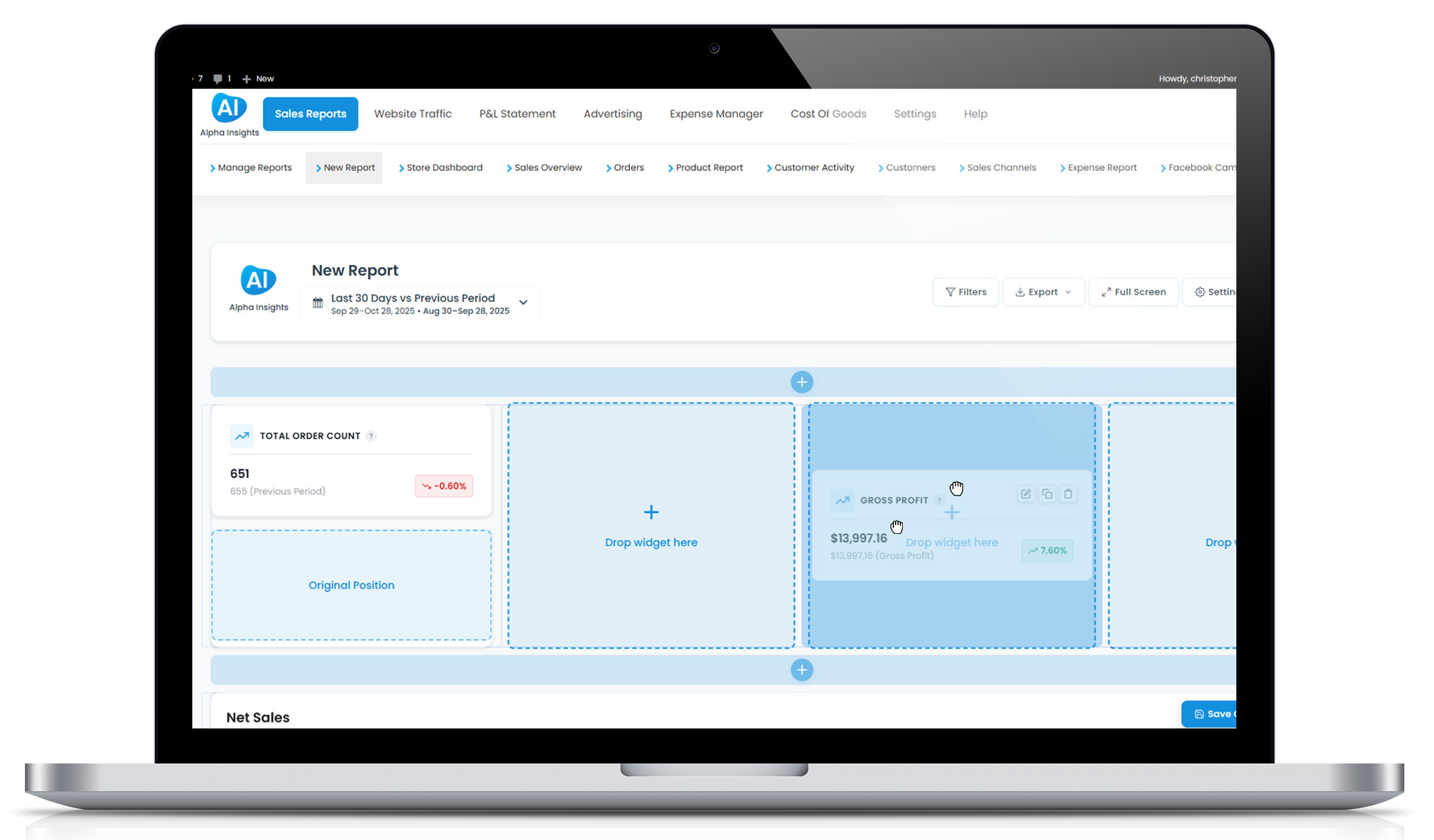
Customization is key. WooCommerce offers flexibility in dashboard customization, but for an enhanced experience, consider using specialized analytics plugins. A tool like Alpha Insights is designed specifically for WooCommerce and allows you to tailor reports directly to your strategic needs, ensuring that every piece of data you gather is relevant and impactful.
Advanced Tactics for Aligning Reporting and Strategy
Integration with Other Data Sources
For a holistic view, integrate other data sources like Google Analytics, CRM systems, or ERP software with your WooCommerce store. This provides a multi-dimensional view of your business health and customer journey, enriching your strategic insights.
Utilizing Predictive Analytics
Move beyond what happened to what might happen. Predictive analytics can forecast trends based on historical data, helping you to anticipate market changes, adjust your strategies proactively, and stay one step ahead of competition.
Segmentation and Personalization
Use advanced segmentation to create personalized reports that reflect different aspects of your business or customer base. Tailor marketing strategies to different segments to optimize resource allocation and maximize ROI.
Consistently Review and Adapt
Alignment is not a one-time act but a continuous process. Regularly review your reports in light of your strategic goals. As your business evolves, so should your analytics.
Regular Strategy Check-ins
Hold quarterly reviews of your business strategy versus actual performance. This will help you see where you’re on track, what’s working, and what needs tweaking.
Feedback Loops
Establish feedback loops where insights from WooCommerce reporting directly influence strategic decisions. This ensures that your business remains agile and responsive.
For instance, if your WooCommerce reports, enhanced by Alpha Insights, indicate an unexpected rise in demand for a product category, you could quickly adapt your inventory and marketing strategies to capitalize on this trend.
Conclusion: Let Data Lead the Way
Think of your WooCommerce reports as a compass in the vast sea of eCommerce. When aligned with your strategic map, they guide you towards more informed decisions, optimal resource allocation, and ultimately, greater profitability. Remember, it’s not just about navigating the currents but charting a course to commercial triumph.
Ready to master your WooCommerce analytics? Check out Alpha Insights for a tool designed to bring precision and strategic insight to your WooCommerce store’s data. Your journey towards data-driven success begins now!