How to Identify Profit Volatility Inside Your WooCommerce Store
Dear fellow WooCommerce aficionados, let’s take a whimsical yet critically important jaunt through the undulating hills and sometimes steep valleys of profit volatility within your WooCommerce store. Imagine, if you will, your online store as a giant rollercoaster. Some days, you’re screaming with joy at the top of financial peaks; other days, you’re gripping the safety bar in a trough of despair. Sound familiar? It’s time to smooth out that ride and make the highs more predictable and the lows less stressful.
Understanding Profit Volatility
First thing’s first: What is profit volatility? In simple terms, it’s the measure of how much your store’s profits swing up or down over time. High volatility means big swings—profit one day, loss the next. Low volatility suggests a more consistent profit engine.
Why should you care? Because understanding and managing volatility can lead to better financial health and more predictable business operations, potentially making your store more resilient against whatever cyber winds may blow.
Factors Influencing Profit Volatility in WooCommerce
- Seasonal trends: Just like fashion, your store might have its in and out seasons.
- Market changes: A competitor enters the arena, or a supplier raises rates.
- Website traffic fluctuations: Both the quantity and the quality of traffic can vary broadly, often influenced by SEO, marketing campaigns, or even just the day of the week.
- Operational adjustments: Changes in shipping costs, pricing strategies, or product ranges can all make your profit graph perform acrobatics.
Pinpointing the Peaks and Troughs: Analytic Tools You Need
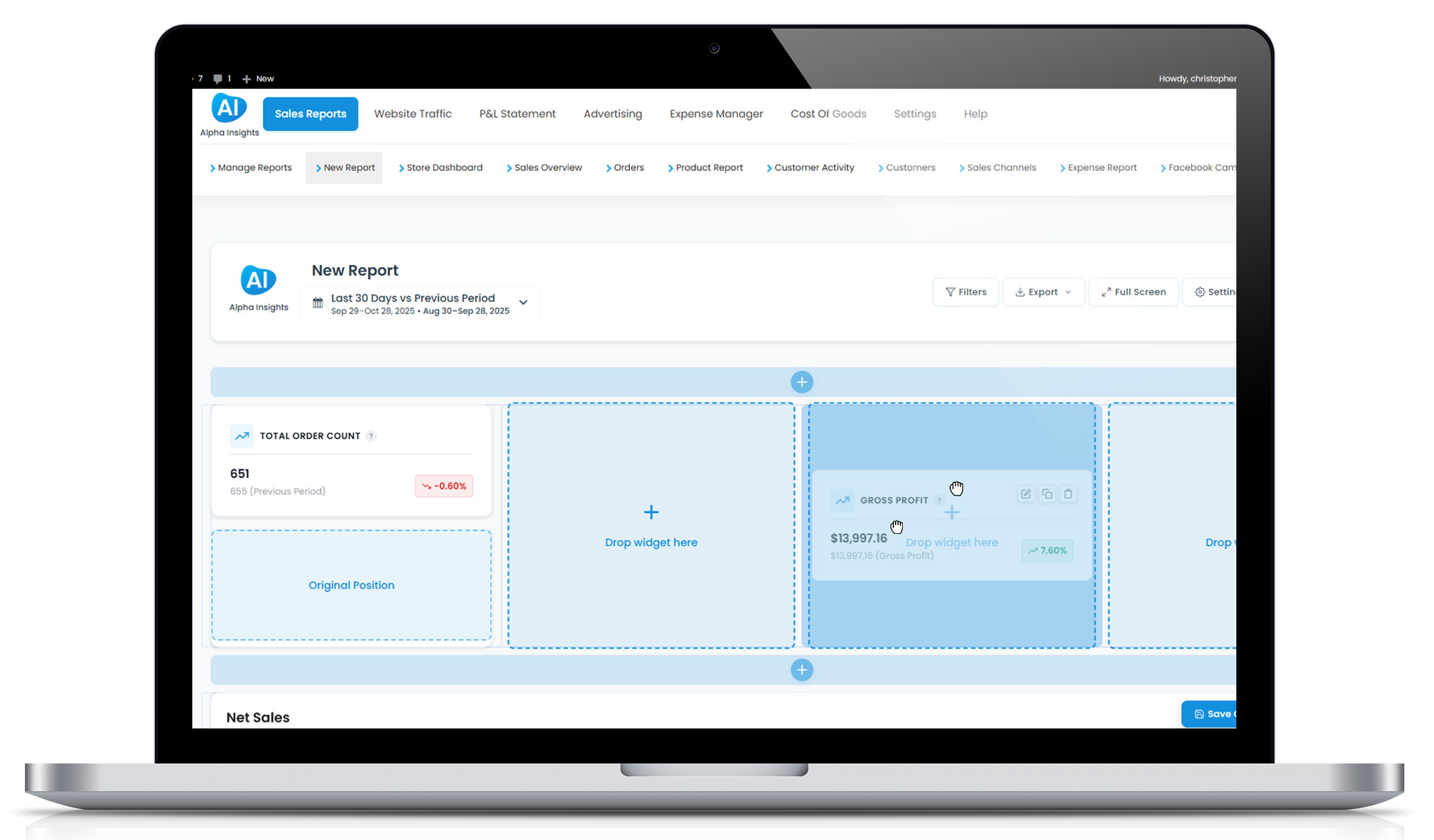
No matter how much you stare at the dashboard of your WooCommerce site, it won’t talk back. Enter stage right: analytics tools. A quality WooCommerce analytics plugin, like Alpha Insights, will not just stand silently but actually start singing with data, pointing out where the profit fluctuations are occurring and more crucially, why.
The Essentials of a Good Analytics Plugin
- Revenue Tracking: A detailed view of daily sales data and sources of revenue helps identify the ‘when’ and ‘where’ of spikes and dips.
- Cost Monitoring: Keeping an eye on your costs as closely as you watch your revenue helps uncover hidden problems dragging down your profits.
- Customer Behavior Analysis: Understanding who buys, what, and when, plus how they navigated your site to those decisions, can provide insights into potentially volatile areas.
- Trend Identification: Long-term data compilation and analysis help forecast future trends, letting you prepare rather than react.
Methods to Analyze Profit Volatility
Conduct a Historical Profit Analysis
Begin by pulling historical data from your analytics tool. Look for patterns or anomalies: Maybe profits shoot up every third Friday, or tank whenever you run a specific ad. Here, tools like Alpha Insights become indispensable by segmenting data effectively, thus simplifying your detective work.
Check the Correlation Between Traffic Sources and Sales
It’s crucial to determine if specific traffic sources lead to more volatile sales patterns. Perhaps organic search brings steadier sales, but social media ads create significant peaks and valleys?
Monitor Inventory and Supply Chain Disruptions
Inventory issues can cause serious profit swings, especially if you sell physical goods. A plugin that tracks inventory against sales data in real-time can alert you to mismatches that may lead to volatility.
Implement Robust Cost Tracking
Unanticipated costs cropping up? If your analytics dashboard highlights an unusual cost spike coinciding with a profit dip, you can dig deeper to find out why and adjust accordingly.
Smoothing Out the Rollercoaster
Strengthen Your Supply Chain
Enhance relationships with suppliers or diversify your supplier base. More stable supply chains contribute to lower profit volatility.
Optimize Your Pricing Strategy
Implement dynamic pricing strategies that adjust to market conditions, competitive actions, and your own business objectives.
Bolster Your Marketing Efforts
Use data-driven insights to create more predictable and effective marketing campaigns that stabilize incoming revenue streams.
In conclusion, much like a well-oiled carnival ride, smoothing the profit volatility of your WooCommerce store doesn’t just happen. It requires maintenance, foresight, and a heck of a good toolkit. A powerful analytics plugin like Alpha Insights can be just that, offering the insights needed to understand and act on profit volatility, ensuring your eCommerce journey feels less like a rickety rollercoaster and more like a sleek maglev train, fast, smooth, and right on track.
Ready to tackle those profit peaks and valleys with style and strategy? Your next best ride awaits. Buckle up—it’s going to be a profitable one!