How to Track Every Dollar in WooCommerce From Sale to Profit
Running a WooCommerce store can sometimes feel like you’re a ringmaster at the world’s busiest circus. With money flowing in and out faster than a high-speed roller coaster, keeping track of every dollar from the initial sale to the final profit can be as dizzying as a day on the merry-go-round. But fear not! It’s time to tame the chaos and transform your store into a well-oiled, money-tracking machine.
In the realm of e-commerce, where competition is just a click away, understanding your shop’s financial ins and outs isn’t just good practice—it’s an absolute necessity for survival and growth. So, buckle up! You’re about to learn how to track every cent through your WooCommerce store.
Why Tracking Your Money is Key to WooCommerce Success
Before we dive into the “how”, let’s refresh on the “why”. Knowing exactly where your money goes after a sale not only keeps you in control but also enables strategic decision-making grounded in data rather than guesswork.
- Better financial management: Every business’s heart beats with the pulse of its finances. Better tracking means better management.
- Insight into profitability: Understanding which products are cash cows and which are financial pits can help you optimize your inventory and marketing strategies.
- Informed strategic decisions: With a clearer financial picture, you can make decisions that propel you towards your business goals faster.
Setting Up Your Tracking System in WooCommerce
The foundation of any good tracking system in WooCommerce begins with the right tools and settings. Here’s where you want to start:
Choose the Right WooCommerce Plugins
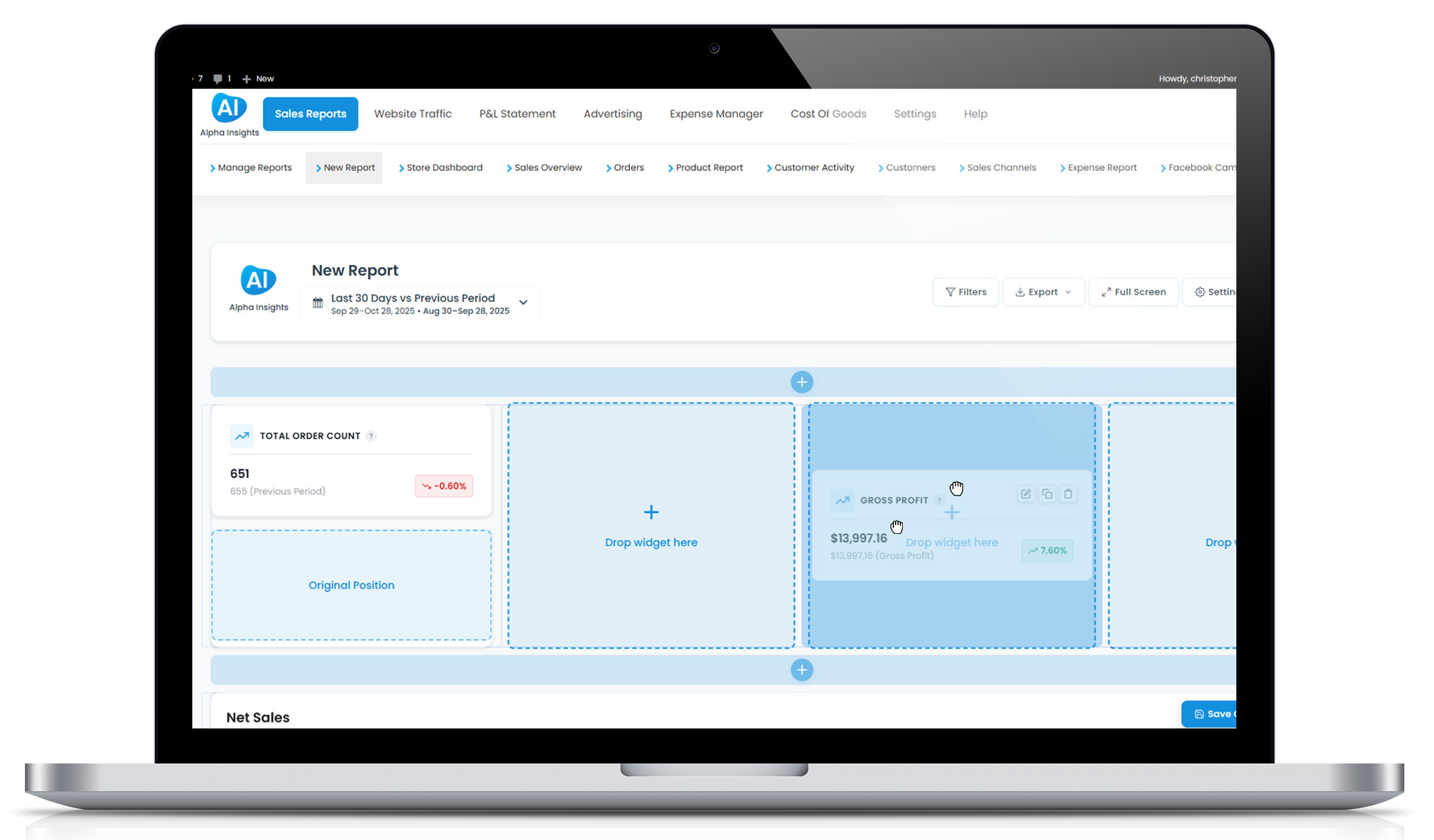
Not all plugins are created equal, and when it comes to tracking finances, you want the cream of the crop. A plugin like Alpha Insights can be a game-changer. It’s designed to provide WooCommerce store owners with detailed insights into their income streams, expenses, and overall profitability in a user-friendly dashboard.
Integrate Accounting Software
Accounting software like QuickBooks, Xero, or FreshBooks can be integrated with WooCommerce to help manage and track your financial data. This integration allows for a seamless flow of data between your WooCommerce store and your financial accounts, ensuring accuracy and up-to-date records.
Tracking Sales: The First Coin in the Fountain
Every journey of a thousand dollars begins with a single sale. Here’s how to make sure you capture every detail from the moment a customer clicks ‘Buy’.
Order Details and Receipts
The basic building block of sales tracking is capturing the order details. WooCommerce naturally excels here, recording every transaction down to the item level. Make sure all details are being captured, including:
- Product details (name, SKU, quantity)
- Payment information
- Shipping costs
- Taxes
- Discounts and coupons
Enhancing Data Capturing with Plugins
To level up your game, plugins like Alpha Insights not only capture these basics but also offer enriched data visualizations and deeper analysis, turning raw data into comprehensive, actionable insights.
Understanding Expenses: More than Just Bills and Receipts
Tracking expenses in WooCommerce goes beyond just knowing how much you’re spending. It’s about understanding how those expenses contribute to or detract from your overall profitability.
Categorizing Expenses
Create categories for every type of expense, including:
- Cost of Goods Sold (COGS)
- Shipping and handling
- Marketing and advertising
- Web hosting and software subscriptions
- Transactional fees (like those from PayPal or Stripe)
This categorization allows for better analysis and understanding of where you might be hemorrhaging money and where you are investing wisely.
Regular Reviews
Schedule monthly reviews of your expenses to ensure that your money is being spent strategically. Use tools to help analyze these expenses in relation to your sales data.
Calculating Profit: The Endgame of Every Sale
Once you’ve tracked every dollar from the point of sale to various expenses, the next and final step is calculating your profitability.
Understanding Profit Margins
Calculate the profit margin for each product and for your store as a whole. This is where Alpha Insights shines by offering clear, understandable metrics that detail your cost versus your revenue on easy-to-read dashboards.
Continuous Optimization
Use the profit data to make decisions about pricing, promotions, and whether to discontinue underperforming products. Continuous optimization based on profit metrics is essential for growth and sustainability.
To sum up, tracking every dollar might seem like a Herculean task, but with the right tools and strategies, it’s entirely feasible. Starting from a solid WooCommerce setup, picking a powerful plugin like Alpha Insights, and maintaining diligent records and reviews will keep your financials in top shape, turning your WooCommerce store into a profit-churning powerhouse.
Ready to take control? Start today by revolutionizing how you track, analyze, and optimize your financials in WooCommerce!